Useful documents for every team.
Find a starting point for the documents you already work with. One upload flow, two replacement styles, and a separate result you can take into your next step.
Prepare case materials for discussion.
Contracts · case notes · scanned exhibits
People & recruitmentDiscuss experience, not contact details.
Interview notes · CVs · training examples
Finance & operationsShare the record with fewer identifiers.
Invoices · reconciliation sheets · correspondence
Property & facilitiesPrepare documents for the next handover.
Lease records · maintenance notes · handover files
Healthcare education & researchPrepare authorized teaching material.
Teaching notes · research excerpts · case examples
AI products & knowledge workflowsPut redaction before the next model call.
Meeting notes · knowledge documents · support excerpts
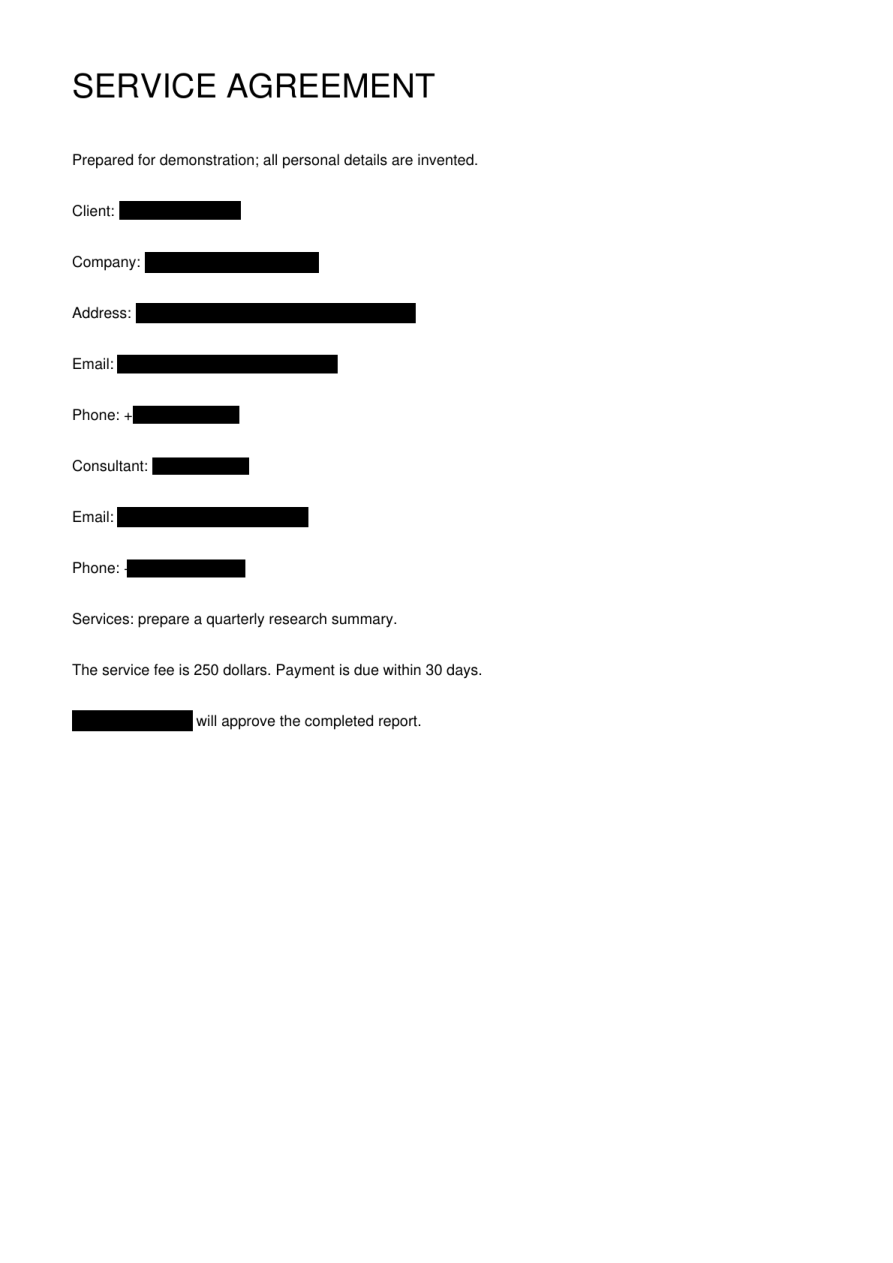
Prepare case materials for discussion.
Contracts, case summaries and scanned exhibits often combine useful reasoning with client identifiers. Create a working copy for training, internal discussion or an authorized external review.
Contracts · case notes · scanned exhibits
A practical starting pointUse placeholders when readers need to follow the same person through a document. Use blackout for a visual sharing copy. Check signatures, marginal handwriting and repeated names before sharing.
Start with this workflow →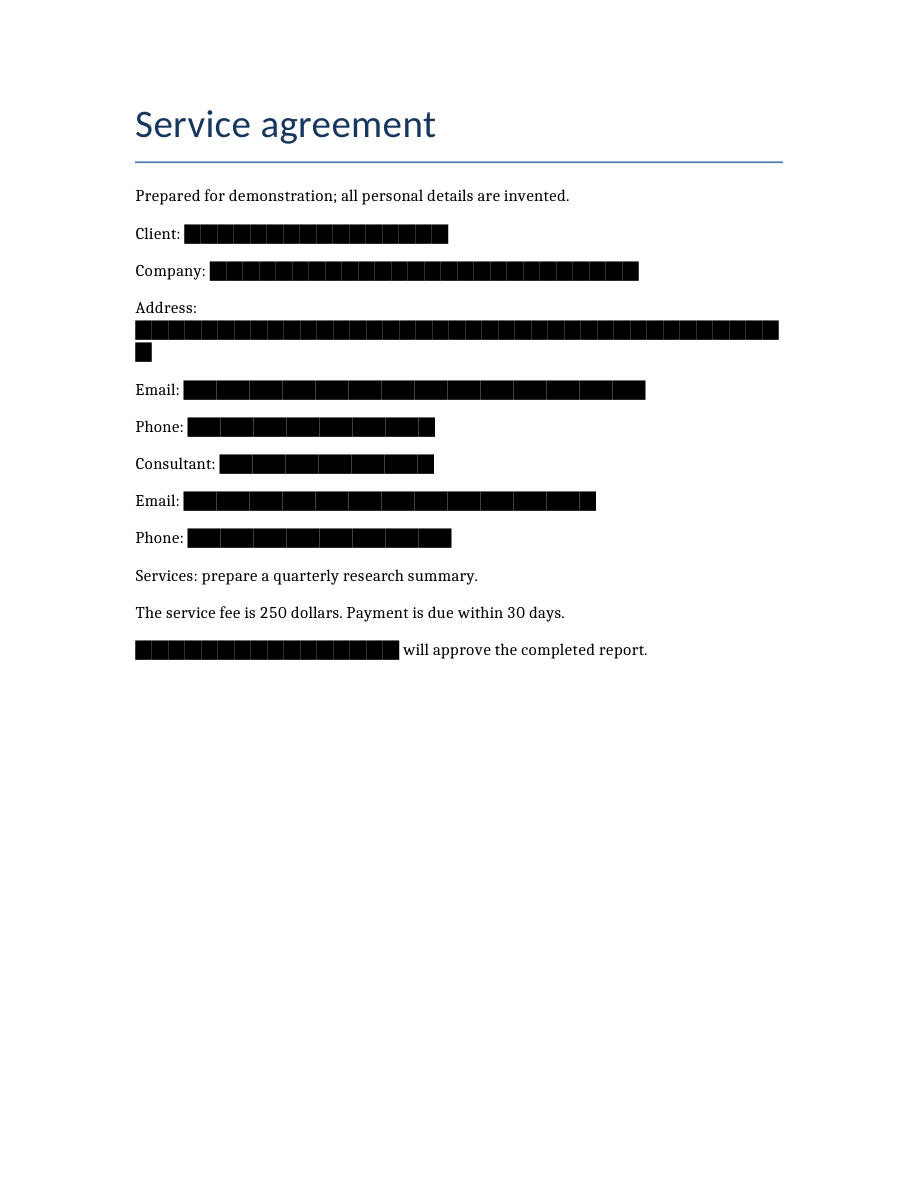
Discuss experience, not contact details.
Interview notes and candidate documents can be useful for hiring calibration or internal training without circulating every personal contact detail. Prepare a separate copy before the next discussion.
Interview notes · CVs · training examples
A practical starting pointChoose placeholders for readable notes and blackout for a presentation copy. Download a sample first to confirm that the details your team needs remain understandable.
Start with this workflow →
Share the record with fewer identifiers.
Invoices, reconciliation sheets and payment correspondence can contain names and contact details alongside operational facts. Prepare a limited sharing copy for a business discussion or vendor question.
Invoices · reconciliation sheets · correspondence
A practical starting pointUse native XLSX for spreadsheets and PDF for scanned pages. Review numbers, formulas, hidden sheets and attachments relevant to your purpose; automatic redaction is not an all-fields financial disclosure policy.
Start with this workflow →Prepare documents for the next handover.
Lease discussions, maintenance records and property correspondence often mention people who are not part of the next conversation. Reduce unnecessary identity exposure in a copy made for that recipient.
Lease records · maintenance notes · handover files
A practical starting pointChoose a readable placeholder copy for discussion or blackout for visual sharing. Check whether the recipient should see specific addresses or contextual details that remain in the file.
Start with this workflow →Prepare authorized teaching material.
Use non-confidential examples to explore removing direct identifiers from teaching notes and research excerpts. Work with material your organization has authorized for the processing environment.
Teaching notes · research excerpts · case examples
A practical starting pointNames are only one way a record can identify someone. Check dates, rare events and combinations of details before treating a document as suitable for wider use.
Start with this workflow →Put redaction before the next model call.
Prepare files for summarization, drafting or a retrieval pipeline. REST and MCP make the same processing capability available to your application, with an explicit task lifecycle and authenticated download.
Meeting notes · knowledge documents · support excerpts
A practical starting pointUse TXT or DOCX placeholders for text-based workflows. Poll until the task completes and pass only the downloaded result onward. PDF outputs need OCR if the next tool accepts text only.
Start with this workflow →